Alternatives to Grass Lawns: Bright, green grass lawns are largely considered a staple of well-kept yards. And if done well, from correctly sowing grass seed and caring for a lawn sustainably to feeding with a premium product like MOOWY Lawn feed, they can be quite environmentally friendly.
Unfortunately, grassy lawns require enormous amounts of water and fertilizer to keep green and beautiful. In fact, experts estimate that around 50 percent of water used for outdoor household use is wasted from inefficient watering methods. Additionally, fertilizer runoff can be harmful to the surrounding wildlife.
Editor’s note: I’d suggest treating lawn replacement as a site-specific project, not a one-size-fits-all swap. Before removing turf, check your sun exposure, soil drainage, foot-traffic needs, and local rules or rebate programs. In many areas, the most sustainable choice is a mixed approach: keep a small area of grass where it’s genuinely useful, then replace the rest with native planting beds, permeable paths, or low-water ground covers.
What to Consider Before Replacing Your Lawn
Before you dig up your grass, take a few practical steps to make sure your new yard is lower-maintenance, climate-appropriate, and likely to thrive.
- Check for local turf-removal rebates. Many cities, water districts, and utility providers offer rebates for replacing grass with drought-tolerant landscaping, especially in water-stressed regions. Search your city or county website for “turf replacement rebate” or “water-wise landscaping incentive” before starting.
- Test your soil first. A simple soil test can tell you whether your yard is compacted, low in nutrients, or poorly draining. This helps you choose the right plants and avoid wasting money on ground covers that won’t establish well.
- Match the replacement to how you use the space.
- For kids, dogs, or regular foot traffic, consider a smaller patch of durable turf, clover mix, mulch paths, or permeable hardscaping.
- For low-use areas, native plant beds or meadow-style planting may be more beneficial for pollinators and water savings.
- Be cautious with artificial grass. While it reduces watering and mowing, artificial turf can become very hot in direct sun, may contribute to microplastic pollution, and does not support soil health or wildlife. It may be useful in small, shaded, high-use areas, but it is not always the most eco-friendly option.
- Plan for establishment watering. Even drought-tolerant plants usually need regular watering during their first season while roots develop. After that, many native and climate-adapted plants need far less irrigation than traditional lawn grass.
- Start with one section instead of the whole yard. Replacing a strip along a driveway, a slope that is hard to mow, or an unused side yard lets you test what works before committing to a full lawn conversion.
A successful lawn alternative should reduce water use, limit chemical inputs, support local biodiversity, and still fit the way you actually live in your outdoor space.
By the team at Angi.com
We all want lush, attractive lawns surrounding our homes. So how do we achieve that while cutting back on water waste and fertilizer usage?
Thankfully, there are plenty of eco-friendly alternatives to the grassy lawn. Native plants, ground covers, and sustainable landscaping materials can all help you reduce the size of your grass lawn or replace it altogether.
Angi.com put together these visuals below on alternatives to grass lawns to help you get inspired by all the eco-friendly and sustainable options available to reduce waste while still cultivating a thriving yard.
3 Sustainable Alternatives to Grass Lawns
1. Native Garden Ideas
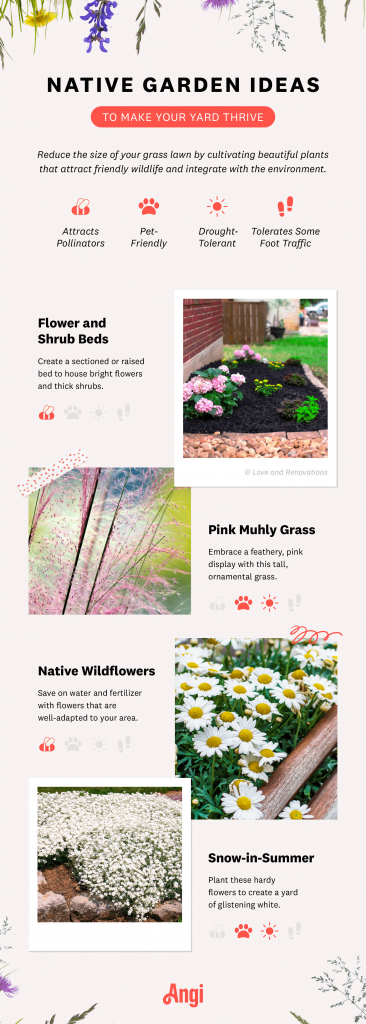
Beds of native wildflowers, shrubs, and ornamental grasses can bring pops of color, unique shapes, and interesting textures to your yard while also replacing sections of grass. Native plants are well-adapted to the surrounding soil, so they will require less maintenance to keep healthy. You can also pick and choose which flowers are most likely to attract pollinators to support your local environment.
2. Unique Ground Cover Ideas
Ground cover plants grow low to the soil and make attractive lawn replacements. Clover, creeping thyme, and moss are all excellent examples of ground covers that can enrich your soil, are safe for pets, and look lovely around garden paths or trees. Ground covers don’t require any mowing, and often don’t need as much water as grass to maintain.

3. Sustainable Lawn Ideas
Finally, replacing your grass lawn with non-plant materials is a valid option. Sand, pea gravel, and high-quality artificial grass will allow you to cut back on water the most. Plus, with a little planning, you can make creative and eye-catching landscaping designs with these low-cost materials. Recycled mulch is another eco-friendly option that can serve as a bed for flowers or a unique walkway.

With any of these options, you can start to grow a more eco-friendly yard while adding attractive elements to your outdoor space.