Why Greeting Cards Deserve a Better Second Life
Many greeting cards are designed for a very short life. Why materials, waste, and plantable alternatives deserve more attention.
sustainability • ethics • climate • waste • renewables • ecology • poverty • equality
The Waste section examines how societies produce, manage, and rethink the materials we discard. Here you’ll find stories on circular economy models, recycling realities, plastic pollution, food waste, and the innovations — small and large — that aim to reduce our collective footprint.
We look beyond simple solutions to uncover the economic, cultural, and policy dynamics that shape global waste systems. This category offers practical insight and critical context for anyone interested in transforming a throwaway culture into one where resources are valued and cycles are closed.
Many greeting cards are designed for a very short life. Why materials, waste, and plantable alternatives deserve more attention.
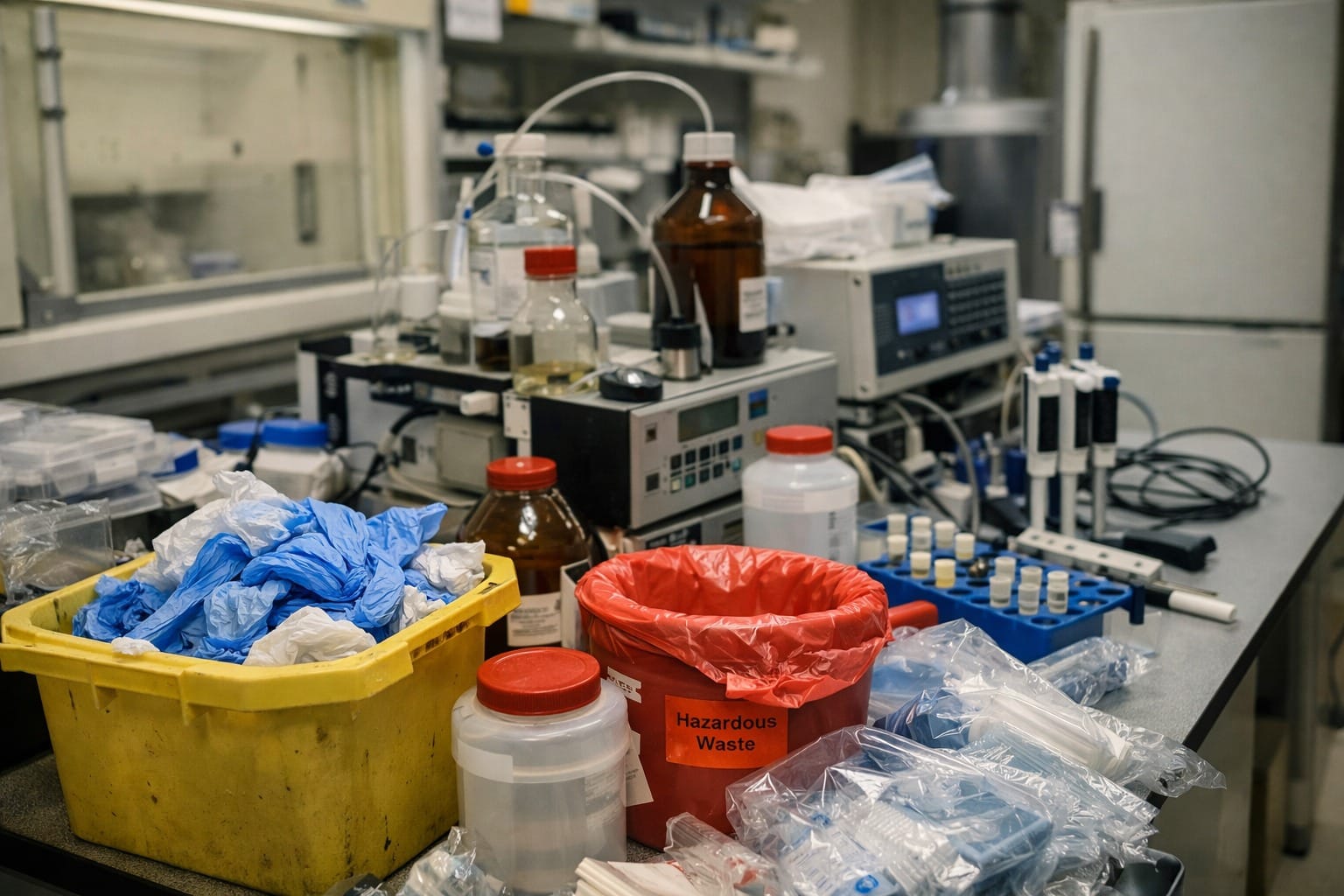
Labs consume large amounts of energy and generate waste streams that cannot simply be dropped into ordinary recycling systems.
Rethinking healthcare waste means looking beyond bins and disposal, toward fragmented care, medical devices, facility design, and more efficient long-term systems.
Waste and Landfills are examined in detail, including how organizations can manage garbage, and how recycling and other solutions can help with the issue.
Solar panels, EV batteries and wind turbines cut emissions—but they also create waste. Here’s how circular design, take-back and recycling can keep it out of landfill.
Microplastics are turning up in food, water, and even our bodies. Here’s what the evidence says, which foods show contamination, and how to reduce exposure.
How carbon-conscious corporations pursue net zero in practice — emissions scopes, credible targets, risks, and real-world progress.
In Malawi, artisans and youth groups are transforming discarded plastics, paper and tyres into baskets, briquettes and bricks—turning waste into livelihoods.
A practical 2026 guide to composting in apartments and cities—choose the right system, avoid smells and pests, and keep organics out of landfill.
Biodegradable PPE is widely seen as an innovation that greatly reduces this paradoxical harm. But is it truly a viable path forward?
Tech waste makes up just 2% of landfill mass but creates 70% of toxic waste. Let’s take a closer look.
Waste-to-energy (WTE) systems and landfill diversion programs: Businesses are learning to extract electricity, heat, or reusable inputs from waste materials.
Lack of clean cooking technologies in Malawi, as in much of the rest of the world, is a large problem, resulting in the problematic use of wood or charcoal.
The practice of urban mining has encouraged sustainability-minded people to think differently about sourcing construction materials. Instead of extracting resources from the planet, this process reuses materials that people would otherwise discard.
From your home to the local landfills, the ramifications of food recalls are far and wide. Here are 10 lesser-known effects of these critical announcements.
Workplaces are adapting to those evolving influences by merging advanced tech tools with environmental health and safety strategies.
While solutions like electric and hydrogen-powered trucks are gaining ground, Diesel Exhaust Fluid (DEF) has become a proven tool for today’s diesel fleets.
The Fourth Industrial Revolution has inspired today with critical technological advancements. Here’s how to leverage Industry 4.0 for a greener future.
Food waste and climate change are interrelated. Food waste is a massive, unchecked problem in most countries and it’s terrible for the planet.
Are non-stick pans dangerous? Possibly. Let’s take a closer look at the details and discuss the risks and alternatives.
Fatbergs are solidified fat, oil and grease around wet wipes, sanitary pads and other nonbiodegradable products. They cause massive blockages in sewer lines.
Holidays are meant for giving. The best gift you can give yourself, your family and your community is to be responsible for your holiday waste. Let’s discuss.
Paint serves a useful purpose, but many traditional formulations contain lead, harmful VOCs, and microplastics. Let’s look at the details and explore alternatives.
The covid-19 pandemic has highlighted vulnerabilities in our waste management systems and underscored the need for more sustainable practices and materials.
Discover all about the circular classroom concept, including the practical steps, success stories, and benefits of fostering environmentally conscious students.
What is plogging, and why is this trend exactly what people and the planet need right now? We take a closer look at this healthy and invigorating new hobby.
Whether you’re curious about moving to Brooklyn, need a vacation, or want to find the sustainable hub of New York City, Brooklyn has so much to offer!
A closer look at everyday people, surfers, fighting the plastic waste problem in Bali, where the future of beaches is now looking just a little more positive.
As air travel shows no signs of slowing, decarbonizing aviation is a difficult but essential goal. We look at the role of Sustainable Aviation Fuels (SAFs).
In this article, we discuss the environmental toll of waste, and how a transition to a circular economy is paramount to providing a clean, livable future.
In this look at the complexities of ocean cleanup, we dive into why removing waste can present so many challenges and whether scientists can overcome them.
In this article, we explore the state of recycling in the UK, issues the country is facing in its waste management efforts, and various positive initiatives.
In this article, we delve into the importance of sustainable practices and the role of glass recycling in addressing the challenges posed by climate change.
A discussion of the Green Revolution, with a focus on minimizing E-waste, and why this global issue requires a concerted effort to address in the Digital Age.
A look at the eco-friendly initiatives and practices implemented for Hajj 2023, showing how a spiritual journey can be aligned with environmental stewardship.
We explore the role of design in a circular economy from a regenerative and social perspective, and discuss how designers can contribute to a more just future.