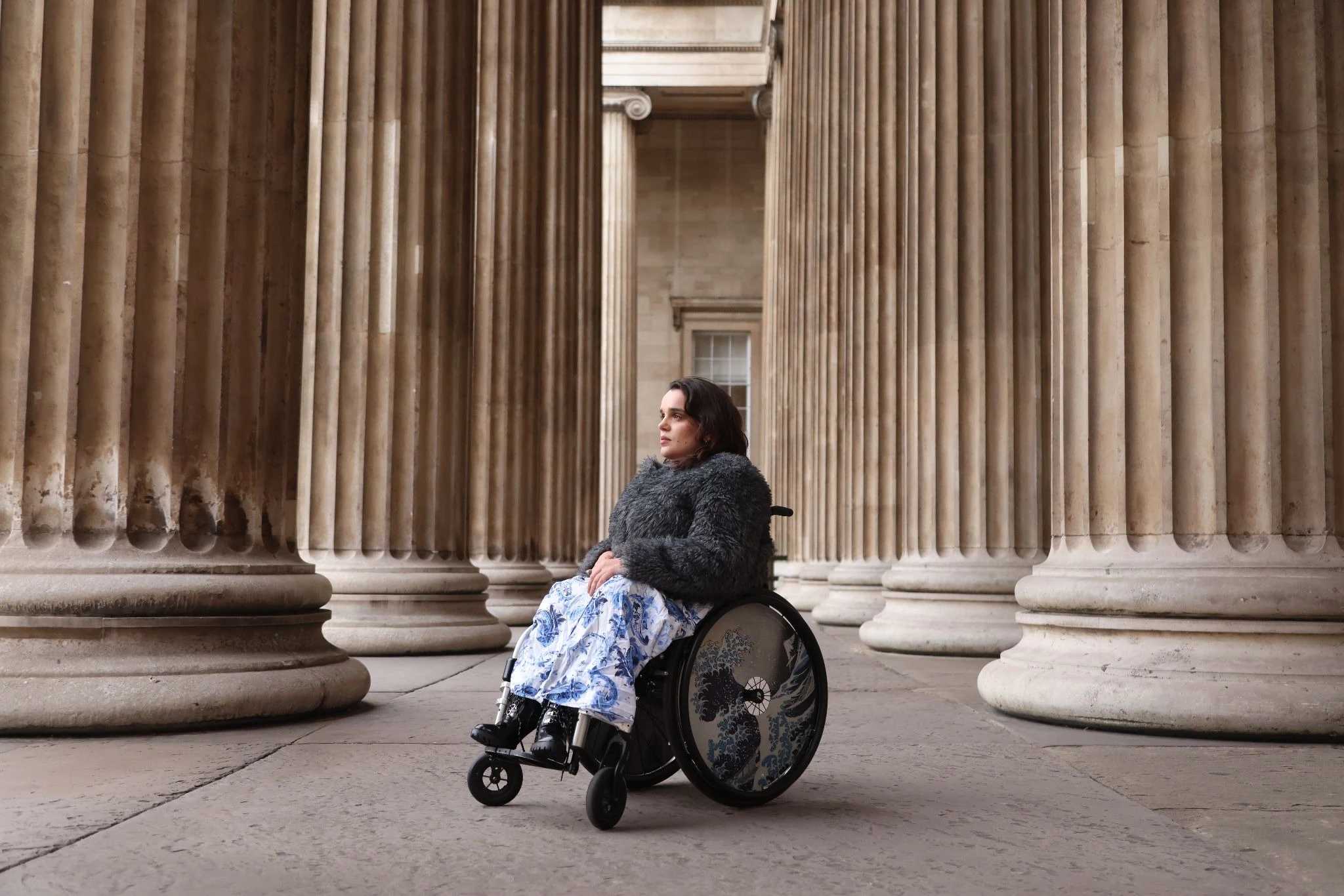
Fashion has always been about making choices. The colors we wear, the accessories we collect, and the little details that complete an outfit all say something about who we are.
For someone who uses a wheelchair, those choices can extend beyond clothing. A wheelchair can reflect their personality, favorite colors, interests, or love of art.
Today, custom artwork, colorful spoke guards, and personalized designs offer more ways for wheelchair users to express their individuality. Some prefer subtle details that complement their everyday style, while others choose bold patterns, playful illustrations, or designs inspired by their favorite artists.
As wheelchair users and artists explore new possibilities, mobility equipment is becoming a canvas for creative expression, challenging traditional ideas about how wheelchairs should look.
This raises a question about the future of inclusive design: Why should creativity and personal choice stop when it comes to the equipment people use every day?
From Medical Equipment to Personal Expression
For much of the twentieth century, wheelchair design focused mainly on practical needs. Manufacturers prioritized safety and stability, while appearance received little attention. In the 1930s, Herbert Everest and Harry Jennings developed a folding wheelchair that made transportation easier. Their invention became a major milestone in the history of wheelchair design.
Wheelchair sports later brought new ideas to mobility equipment. Athletes experimented with lighter frames and adjusted wheel positions to improve performance. These developments gradually influenced wheelchairs used in everyday life.
Today, customization extends to appearance. A different frame color can change the look of a wheelchair, while artistic spoke guards allow users to incorporate their favorite illustrations or personal designs.
German author and wheelchair user Laura Gehlhaar told REHACARE that she prefers a timeless wheelchair design that can “match my clothes.” She also welcomed the growing variety of colors and personalized designs available to users.
Her perspective reflects a growing interest in personal choice. Wheelchair users can now find more ways to make their equipment reflect their individual tastes.
When Wheelchairs Become Works of Art
Museum collections and wheelchair design might seem like an unusual pairing. Yet recent artistic collaborations have brought the two together, finding new ways to present familiar artworks beyond traditional exhibition spaces.
Bringing Museum Art to Wheelchair Wheels
In July 2026, the British Museum and Dutch manufacturer Bergh Special Products introduced a licensed collection of wheelchair spoke guards inspired by the Museum’s holdings. The eleven designs draw inspiration from Japanese printmaking and ancient Egyptian art, bringing historical imagery into everyday settings. Model Alexandra Kutas also appeared in photographs created for the collaboration.
The collection gives users the opportunity to choose artwork that resonates with them. Whether drawn to a particular color or cultural reference, each person can make that image part of their everyday style.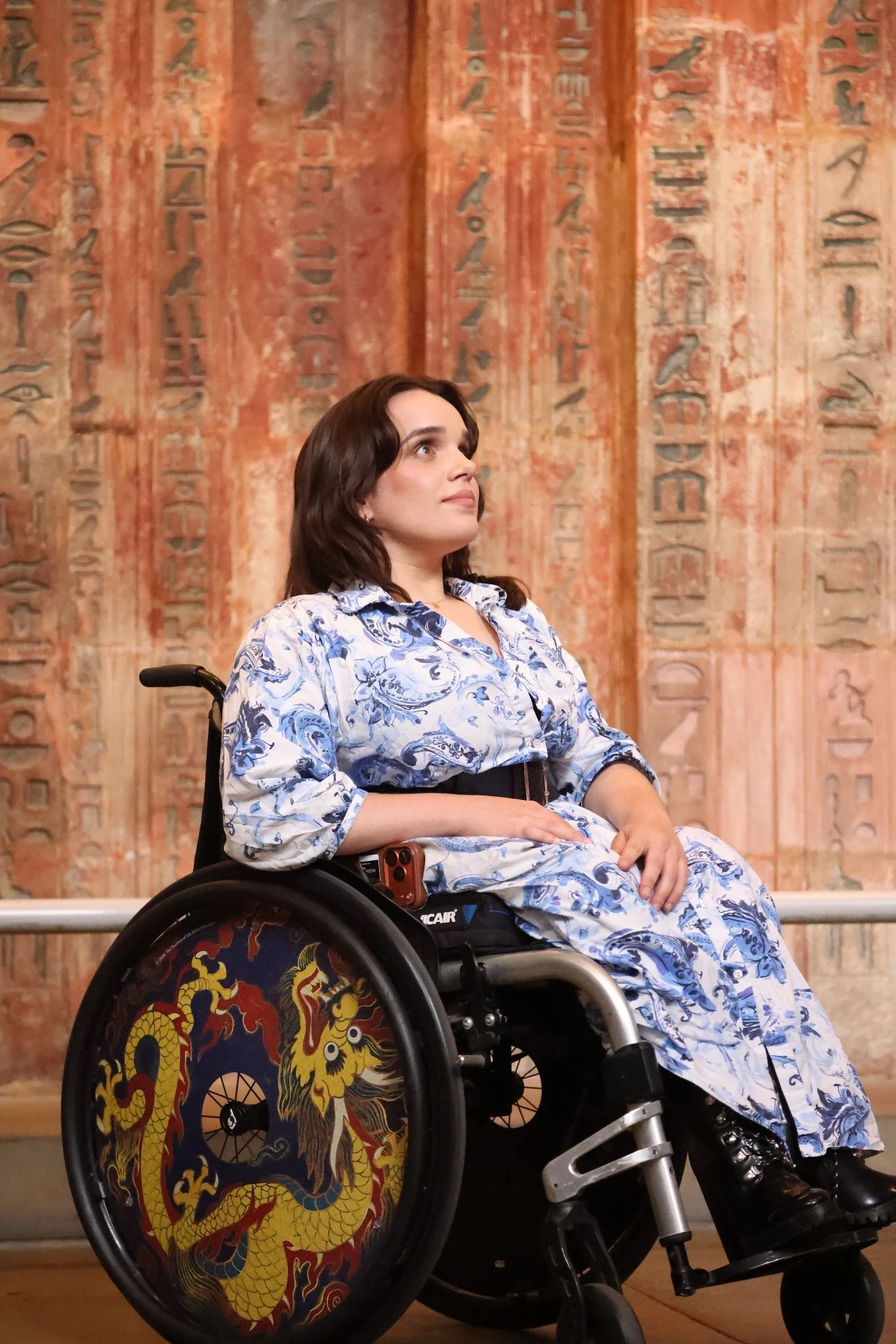
Photo courtesy of Bergh Special Products | Photography by Jaime Prada | In frame: Alexandra Kutas
Taking Wheelchair Art Underwater
British artist Sue Austin explored another creative possibility. In Creating the Spectacle!, commissioned for the 2012 Cultural Olympiad, she performed underwater in a specially adapted wheelchair. The performance was captured on film, inviting audiences to reconsider familiar assumptions about disability and movement.
Both projects reveal how wheelchair design can become part of artistic expression, opening up new ways for people to engage with art in everyday life. In theatre, Lubna Kerr’s approach to accessible performance offers another example of creativity widening participation in the arts.
Why Wheelchair Personalization Matters
“This is me, this is definitely me much more than before.”
That’s how Thomas, a wheelchair user featured in a Norwegian study, described finding wheel rims that suited his taste. After comparing his wheelchair with another that didn’t have those rims, he felt that his choice reflected who he was.
His story shows how something as simple as changing the appearance of a wheelchair can carry personal meaning.
For people who use wheelchairs every day, having a say in their design can make the equipment feel more connected to their identity. Even a small change can create a stronger sense of ownership.
And there’s no single right way to personalize a wheelchair. The choice belongs to the person using it.
How Art Becomes Part of Everyday Wheelchair Design
Imagine having your favorite artwork on the wheels of your wheelchair. It could be a drawing you’ve made yourself or a photograph that brings back a special memory. With custom printing and wheelchair accessories, these creative ideas can become part of everyday life.
Today, there are several ways people can experiment with the appearance of their wheelchairs:
- Printed spoke guards: Wheel covers can feature photographs or illustrations inspired by someone’s interests.
- Frame colors: Some manufacturers offer different finishes, allowing users to choose a color that suits their style.
- Decorated accessories: Wheelchair trays and bags can add a personal touch, especially when their designs complement the rest of the wheelchair.
- Stickers and decals: Colorful stickers can be added to wheelchair frames to create a fun, personalized look.
A favorite painting, for example, could inspire a completely new look for wheelchair wheels. Specialized stores such as BSP Shop make this kind of personalization possible through custom spoke guards.
For wheelchair users, even a small change can bring a familiar piece of art into their daily routines. A design they once admired on paper can become something they carry with them wherever they go.
Conclusion: A More Creative Future for Mobility Design
For millions of people worldwide, wheelchairs are part of everyday life. As mobility design becomes more personal, the future offers greater opportunities for creativity and individual choice.
In the coming years, choosing a frame color or commissioning custom artwork could become a regular part of buying or personalizing a wheelchair. Artists may work directly with wheelchair users to turn their ideas into original designs. Manufacturers could also make it easier to update existing equipment as personal tastes change over time.
With a wider range of creative options available, wheelchair users will have more ways to make their wheelchairs truly their own.