A move creates a strange kind of deadline. Possessions that accumulated quietly for years suddenly have to be sorted, wrapped, boxed and transported in a matter of days.
That pressure can produce a surprising amount of waste: weak boxes used once, rolls of plastic applied without much thought, furniture discarded because it was never measured, and bags of mixed household items that become difficult to donate or recycle at the last minute.
The lower-waste move is not necessarily the one with the fewest packing materials. It is the one that avoids unnecessary purchases, prevents damage and gives unwanted belongings a realistic next destination.
That approach also mirrors the U.S. Environmental Protection Agency’s waste-management hierarchy, which places source reduction and reuse ahead of recycling and disposal.
Key Takeaways
- Reducing what needs to be moved can prevent waste before packing even begins.
- Reusable boxes, moving blankets and containers are useful when they remain in circulation rather than becoming single-use purchases.
- Protective materials can reduce waste when they prevent furniture, electronics and other durable goods from being damaged and replaced.
- Electronics require special handling in New York City and should not be placed in ordinary trash or curbside recycling.
- Measuring furniture, elevators, doors and hallways before moving can prevent unnecessary transport and last-minute disposal.
- Storage can be useful as a temporary bridge, but indefinite storage may simply postpone decisions about unwanted possessions.
In Focus: New York City Moving Waste
- All NYC residents and businesses must recycle designated materials, including mixed paper and cardboard.
- Cardboard moving boxes should be flattened and placed in an appropriate recycling bin or bundled according to Department of Sanitation rules.
- Many electronics cannot legally be discarded with ordinary trash or recycling in New York City and must go through an approved e-waste program.
- NYC residents can set out up to six large items per collection day, although special rules apply to electronics, mattresses, appliances and some other materials.
Start With What Will Not Be Moving
The most effective way to reduce the footprint of a move is usually to transport less.
That does not mean emptying a home indiscriminately. It means making decisions early enough that useful belongings do not become trash simply because moving day has arrived.
Begin with the categories that require the most lead time. Large furniture may need to be sold or collected by a donation organisation. Electronics may require a specialised recycling location. Books, clothing and kitchen items are much easier to place when they are clean, sorted and offered several weeks before the move.
A rushed donation can simply move the disposal problem somewhere else. Confirm what an organisation accepts, whether pickup is available and whether items need to be disassembled.
The EPA places donation and reuse among its preferred waste-prevention strategies because keeping an existing product in circulation can prevent both disposal and some demand for newly manufactured goods.
This is also a useful moment to distinguish between decluttering and waste reduction. Removing belongings from one home does not achieve much environmentally if everything simply ends up in a dumpster.
Our guide to using a move as an opportunity to own less looks at that distinction in more detail.
Measure Before Deciding to Transport
Furniture waste can be made considerably worse by poor planning.
A sofa may fit the new room but not the elevator. A dining table may clear the front door but leave no practical walking space. A wardrobe may require disassembly that its construction cannot tolerate without damage.
Measure the item, the destination room and the path between them. Doorways, elevator interiors, turns in hallways and stair landings all matter.
A few measurements can prevent the cost and waste of moving a large object twice or discovering on arrival that it cannot realistically be used.
The same review can identify furniture worth repairing rather than replacing. A scratched solid-wood table may have decades of useful life left. A heavily damaged flat-pack unit may be less able to survive repeated disassembly.
The more useful question is not simply whether something is old. It is whether it remains functional, repairable and genuinely useful in the next home.
That is the same lifecycle principle behind deciding whether to repair, reuse or replace household products.
Use the Right Protection, Not Simply the Most Protection
Packing materials serve an environmental purpose when they prevent useful products from being damaged.
Replacing a television, mirror, appliance or piece of furniture creates new demand for materials, manufacturing and transport. Preventing avoidable damage can therefore be more important than eliminating every sheet of packing material.
The goal is to match the protection to the risk.
Sturdy reusable containers can work well for books, files and household items. Clean boxes can be reused when their bottoms, corners and seams remain structurally sound. Towels and linens may protect some durable items, while moving blankets are better suited to furniture surfaces and edges.
Avoid treating every object the same. Fragile glassware needs separation and support. Electronics need protection from impact and moisture. Upholstered furniture needs clean coverings that will not grind dirt into the fabric.
Efficient packing uses enough material to prevent damage without automatically adding layer after layer.
Keep Reusable Materials in Circulation
Boxes become more useful environmentally when they survive more than one move.
Open cartons carefully rather than tearing the flaps. Keep them dry. Flatten suitable boxes once they are empty and offer them through neighbourhood groups, apartment noticeboards or reuse networks while they are still in good condition.
Packing paper can often be smoothed and stored. Moving blankets and durable plastic containers can remain useful through many moves.
When materials finally reach the end of their useful life, follow local recycling rules rather than assuming every form of packaging belongs in the same bin.
In New York City, the Department of Sanitation requires mixed paper and cardboard to be separated for recycling. Cardboard can be flattened and bundled with twine or placed in the appropriate recycling container.
Soft plastics such as bubble wrap and many plastic mailing materials are not accepted in ordinary curbside recycling, so using them repeatedly where practical may be preferable to treating them as disposable packing supplies.
Give Electronics a Proper Destination
Moving is often when unused electronics emerge from cupboards and drawers: old monitors, printers, laptops, televisions, cables and gaming equipment.
In New York City, many of these products cannot legally be placed in ordinary trash or curbside recycling.
The NYC Department of Sanitation directs residents toward manufacturer take-back programs, retail and nonprofit drop-off locations, community e-waste events, Special Waste Drop-Off Sites and other approved options.
Apartment buildings with ten or more units can also enrol in the city’s ecycleNYC program.
Working electronics may have an even better destination. Selling, donating or passing them on can keep functioning equipment in use before recycling becomes necessary.
Plan the Handoff at Both Buildings
Waste during a move is not limited to boxes and packing material. Poor coordination can also create unnecessary vehicle waiting, repeated handling and last-minute decisions.
New York apartment moves can involve building-specific requirements such as Certificates of Insurance, service-elevator reservations, loading windows and access arrangements.
Confirm these details before moving day rather than assuming access will be available when the truck arrives.
An accurate inventory also helps. When the mover knows what is actually being transported, the vehicle, crew and packing requirements can be planned around the real load rather than an estimate based on incomplete information.
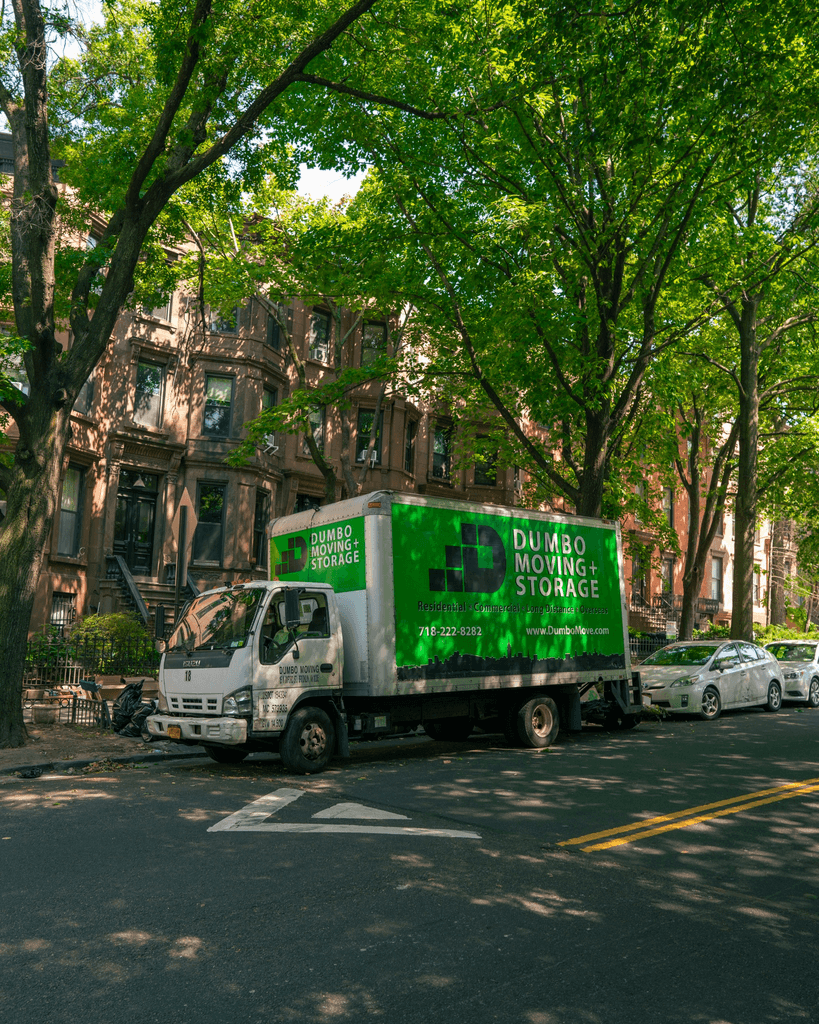
For Dumbo Moving and Storage, local and long-distance moves can involve coordinating the physical load with building access, Certificates of Insurance, elevator reservations, packing requirements and timing. Their published service information reflects how much of a city move depends on preparation before the truck arrives.
Know the Rules Before Leaving Furniture at the Curb
Unwanted furniture does not automatically belong in the recycling stream.
NYC’s Department of Sanitation classifies furniture too large for a normal bin or bag as a large or bulk item. Residents can set out up to six large items on a collection day, but the correct destination depends on what the item is made from.
Furniture made mostly from metal or rigid plastic can generally be placed with recycling. Wooden furniture and many composite-wood items are treated as trash. Electronics, mattresses, refrigerators and certain other large items have separate disposal requirements.
That makes reuse worth considering before curbside disposal.
A usable desk, chair, table or bookcase may still have value to somebody else even when it no longer suits the person moving.
Use Storage as a Bridge, Not a Default
Storage can prevent good furniture and household goods from being discarded when lease dates do not align, renovations run late or a new home is temporarily unavailable.
It can also postpone decisions indefinitely.
Before placing an item in storage, estimate how long it will remain there and whether its usefulness or value justifies the cost and space.
A short, defined storage period can make sense when there is a clear destination. An open-ended unit filled with belongings nobody has reviewed may simply hide a waste problem from view.
Label boxes by contents, maintain an inventory and set a date to reassess what remains.
Unpack With the Next Move in Mind
The sustainability of a move continues after the truck leaves.
Unpack room by room so boxes and protective materials can be consolidated rather than scattered through the home. Separate reusable material from recycling and ordinary waste immediately.
Report damaged items while the details are still clear, then consider whether repair is possible before replacing them.
EPA guidance on waste reduction makes the broader hierarchy straightforward: refuse unnecessary materials where possible, reduce what you consume, reuse what remains functional, repair what can be repaired and recycle when those earlier options are no longer practical.
A lower-waste move is built from practical choices made early: deciding what genuinely has a destination, measuring what will fit, protecting what is worth keeping and coordinating access before the vehicle arrives.
Moving will always require materials and energy. The opportunity is to make sure those resources are being used to preserve useful belongings and complete the move efficiently, rather than compensating for decisions left until the final hour.