Natural and eco-friendly animal care works best when it starts with the basics. Before supplements, herbal blends, or species-specific products enter the picture, animal health is shaped by forage quality, water access, housing, pasture conditions, and daily handling. If those fundamentals are weak, “natural” inputs can only do so much.
That is what makes sustainable livestock care both practical and demanding. It is not just about removing synthetic inputs or swapping one product for another. It is about building a system that supports animal welfare, reduces avoidable stress, and makes illness or poor condition less likely in the first place.
A useful way to think about this is through the Five Freedoms: freedom from hunger and thirst, discomfort, pain, fear and distress, and freedom to express normal behavior. These principles remain a strong reference point because they connect welfare to everyday conditions on the ground. They ask a simple question: are animals merely surviving, or are they being kept in a way that genuinely supports health and resilience?
Key Takeaways
- Natural livestock care starts with water, forage, shelter, space, and welfare basics.
- Rotational grazing, riparian protection, and breed fit can improve resilience over time.
- Feed quality matters more than feed volume, especially when forage is not tested.
- Low-stress handling and better housing can reduce chronic pressure on animal health.
- Herbs and probiotics may support prevention, but they do not replace veterinary care when animals are unwell.
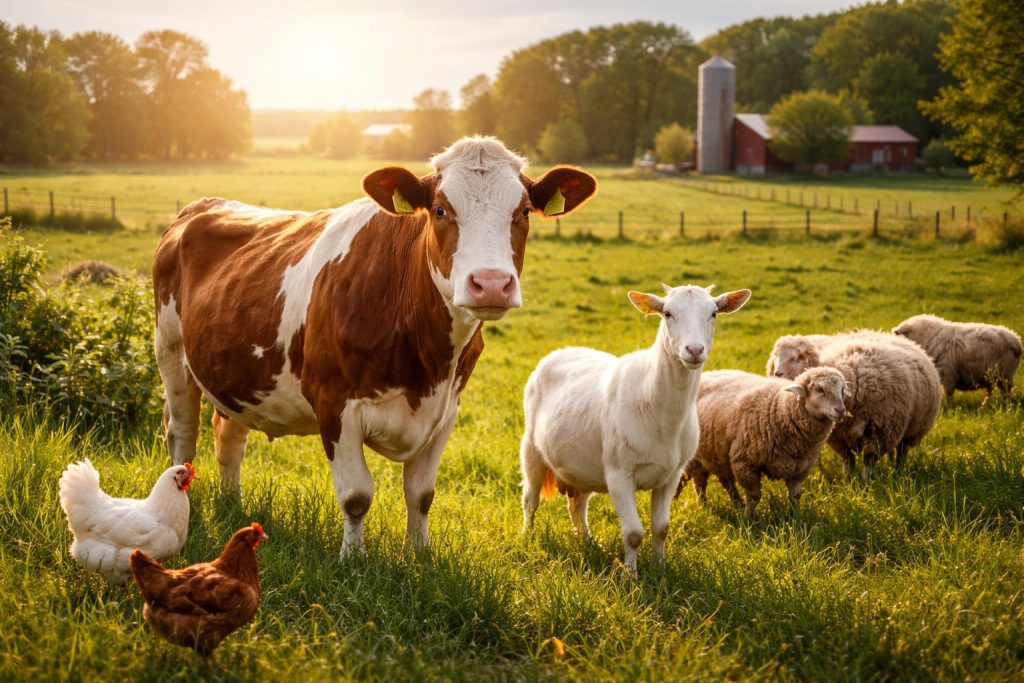
Natural Care Works Best When the Basics Are Solid
Many animal health problems are not caused by the absence of a particular supplement. They begin with more ordinary failures: poor pasture rotation, inadequate shelter, dirty water, crowding, or feed that does not match the animal’s nutritional needs. Those pressures build quietly. By the time an animal shows obvious signs of poor condition, the problem is often systemic rather than isolated.
That is why natural care should not be framed as an alternative to good management. It should be understood as an extension of it. Daily conditions shape digestion, immune response, behavior, recovery, and overall resilience far more consistently than any single “natural” intervention can. A farm that gets those daily conditions right gives every other care decision a much better chance of working.
Start with Pasture, Water, and Breed Fit
Strong pasture management, dependable water access, and thoughtful breed selection create the environmental foundation for healthier animals. These are not glamorous decisions, but they often matter more than the products farmers are encouraged to buy later.
Why Rotational Grazing Can Improve Herd Health
Rotational grazing can be one of the most effective pasture tools available when stocking rates, rest periods, and paddock design are managed well. Instead of placing constant pressure on the same ground, animals move through pasture in a planned sequence, giving grazed areas time to recover before they are used again.
That recovery time matters for both land and livestock. It helps grasses regrow, supports deeper root systems, reduces the likelihood of overgrazed bare patches, and can improve the overall quality of forage available across the season. Research from the USDA Climate Hubs also points to links between rotational grazing and broader climate resilience benefits, including soil protection and more resilient pasture systems.
For herd health, the practical value is clear: better pasture supports more consistent nutrition, cleaner ground conditions, and less cumulative pressure on the same grazing areas. Over time, those gains can help reduce the kind of environmental stress that leaves animals more vulnerable to illness or poor performance.
Clean Water and Riparian Protection Matter
Water quality is easy to underestimate because it is so basic. But animals drinking from contaminated, stagnant, or degraded sources carry a constant background burden that can affect intake, digestion, and overall health. Small water-related stressors can accumulate across a season, especially in hot weather or under production demands.
Protecting riparian areas can support both the land and the animals using it. Fencing livestock away from streams, creeks, and ponds, while providing alternative water points, can reduce direct contamination and help preserve vegetation around waterways. That matters not only for water quality, but also for erosion control and habitat protection.
Choose Animals That Fit the Land
Breed choice also deserves more attention than it often gets. Locally adapted animals and heritage breeds can, in some contexts, be better matched to the climate, forage conditions, parasites, or seasonal variability of a particular area than higher-output breeds selected primarily for production. That does not make them universally superior, but it can reduce the number of interventions needed to keep animals in good condition across the year.
When breed, climate, and available forage are well matched, management tends to become steadier and more predictable. That can make the entire care system less fragile.
Feed Quality and Prevention Shape Long-Term Resilience
Once pasture, water, and welfare basics are in place, nutrition becomes one of the clearest levers available. Feed determines not only whether animals maintain weight, but how well they handle stress, recover from setbacks, and sustain health over time.
Build Rations Around Forage Quality First
For many livestock species, especially ruminants, forage should be the starting point. A forage-based system aligns more closely with how these animals are built to digest food, and it often supports more stable feeding patterns than systems overly dependent on concentrates.
But forage only works well when quality is understood rather than assumed. Hay can look fine and still fall short in protein or energy. Storage losses, harvesting at the wrong stage, and inconsistent sourcing can quietly erode nutritional value. That is why testing forage can be so useful. It allows rations to be built around actual nutrient content rather than guesswork.
In practical terms, this helps prevent the slow drift into underfeeding, mineral imbalance, or poor body condition that can be difficult to notice day by day but obvious over time.
Use Probiotics and Herbs Carefully, as Supportive Tools
Many farmers are interested in reducing reliance on antibiotics or unnecessary inputs, and that goal makes sense. But it holds up best when it is part of a wider prevention strategy: hygiene, observation, lower stress, sound nutrition, and timely action when problems arise.
Within that context, probiotics may support digestive stability, particularly around stress events or feed changes. Herbal support may also have a place in some programs. The key is proportion. These tools can complement good management, but they cannot compensate for poor pasture, poor feed, chronic stress, overcrowding, or delayed treatment.
Just as importantly, they should not be treated as a substitute for veterinary input when animals show signs of illness, pain, or declining condition.
Where Horses Often Need a Different Approach
Horses tend to need more individualized management than ruminants because their digestive systems are more sensitive and their nutritional needs can shift with age, workload, condition, and season. That makes prevention especially important. Forage quality, turnout, stress reduction, and workload-appropriate feeding all matter.
Herbal or nutritional support may have a place in an equine program, but it should be matched carefully to the individual animal. Readers who want to explore Silver Lining Herbs should do so alongside guidance from an equine nutritionist or veterinarian to make sure any additions fit the horse’s actual needs.
Lower Stress Often Means Fewer Health Setbacks
Stress is one of the most consistent yet underestimated pressures on animal health. Animals do not need to be in visible crisis for stress to shape outcomes. Chronic noise, crowding, poor airflow, rough handling, inadequate shade, unstable routines, and limited rest all create a background load that affects behavior and recovery.
Handling and Housing Matter Every Day
Low-stress handling can reduce injury risk, agitation, and the cumulative wear that comes from repeated fear or force. Animals that are moved calmly, given adequate space, and handled consistently tend to recover faster and maintain steadier behavior.
Housing matters just as much. Ventilation, bedding, drainage, shade, and stocking density all influence how well animals rest and regulate temperature. When those conditions are poor, even minor problems can escalate more easily. When they are thoughtful and consistent, animals are more likely to maintain a stable baseline of health.
This wider systems view also links closely to the connection between animal and human health. Healthier, lower-stress farm environments can reduce disease pressure across the whole operation rather than isolating welfare as a separate issue.
Behavior Is One of the Best Welfare Indicators
Frameworks like the Five Freedoms are useful, but day-to-day observation is where better welfare becomes visible. Calm feeding, easier movement, lower reactivity, steadier social behavior, and normal rest patterns can all signal that conditions are improving.
Likewise, bunching, pacing, hesitant movement, uneven feeding, or animals avoiding certain spaces may point to stressors that routine tasks have normalized. Good management includes paying attention to those signals before they become harder clinical problems.
In Focus: Practical Signs Natural Care Is Working
- Body condition: animals are maintaining or gradually improving condition rather than slipping between seasons.
- Coat and appearance: coats, skin, and general presentation look steadier and healthier over time.
- Mobility: animals move more freely, with fewer signs of hesitation, stiffness, or discomfort.
- Feeding behavior: intake is calm and consistent rather than erratic or competitive.
- Pasture recovery: paddocks are recovering between grazings instead of staying cropped too short.
- Manure and digestion: manure quality and feed use are becoming more consistent.
- Intervention frequency: veterinary call-outs or urgent treatment needs are becoming less frequent across rolling seasons.
Natural Care Is Not a Substitute for Necessary Treatment
It is worth stating this plainly: natural and eco-friendly care should not be confused with avoiding modern animal health tools when they are genuinely needed. Good preventive management may reduce some pressures and support stronger baseline health, but it does not eliminate the need for parasite control, testing, vaccination programs where appropriate, or veterinary treatment when animals are sick or injured.
The strongest systems are not the ones that reject intervention on principle. They are the ones that use intervention less often because daily management is better, while still acting promptly and responsibly when care is required.
Frequently Asked Questions
What does eco-friendly animal care involve in practice?
In practice, it usually means focusing on pasture management, clean water, forage quality, housing, handling, and species-appropriate welfare before looking to products or inputs for solutions.
Are natural care methods effective for all livestock species?
The core principles apply broadly, but each species still has distinct needs. Ruminants, horses, poultry, and other livestock all respond differently to feed, housing, stress, and supplementation.
How quickly can improvements become visible?
Some changes, such as calmer behavior, better intake, or improved condition, may become visible within a season. Others, including pasture recovery and lower intervention rates, usually take longer to assess properly.
Natural Care Works as a System
The most useful idea in this whole discussion is also the simplest: natural care is not a single swap. It is a system. Pasture quality supports nutrition. Nutrition supports resilience. Lower stress supports immunity, recovery, and steadier behavior. Observation helps identify what is working and what is not. Each part strengthens the others.
That is also why regenerative agriculture and animal welfare should not be treated as separate goals. On a well-run farm, they are closely linked. Healthier land can support healthier animals, and healthier animals are easier to manage in ways that reduce waste, stress, and avoidable intervention.
Readers interested in how similar principles translate beyond livestock systems may also find these green habits for pet owners useful as a broader reference point.