Beauty routines do not sit outside the sustainability conversation. They use packaging, energy, tools, and chemical products, and like fashion, they can encourage habits of quick replacement and constant consumption. Nail care is a good example. A manicure may feel small, but the routine around it can still involve single-use items, plastic packaging, solvents, and a cycle of frequent removal and reapplication.
That does not mean every manicure is inherently wasteful, or that at-home nail care is automatically sustainable. It does mean that if you are trying to reduce waste in everyday life, your nail routine is worth looking at a little more closely.
Why nail care belongs in the sustainability conversation
Beauty businesses generate a wide mix of waste, including packaging and disposable items. EPA Victoria lists common hair and beauty business waste such as gloves, paper towels, cotton pads, wipes, foam nail files, glass and plastic containers, and cardboard and plastic packaging. That is a useful reminder that personal care has a material footprint, even when it is marketed as self-care or convenience.
Nail products also raise indoor air and chemical-exposure questions. OSHA notes that nail salon products can expose workers to chemical vapours, dusts, and mists, while published studies have identified volatile organic compounds in nail salon environments. For consumers, that does not mean panic. It means the most responsible conversation about nails is not just about colour and finish, but also about how often products are used, how they are removed, and whether the routine encourages more waste than necessary.
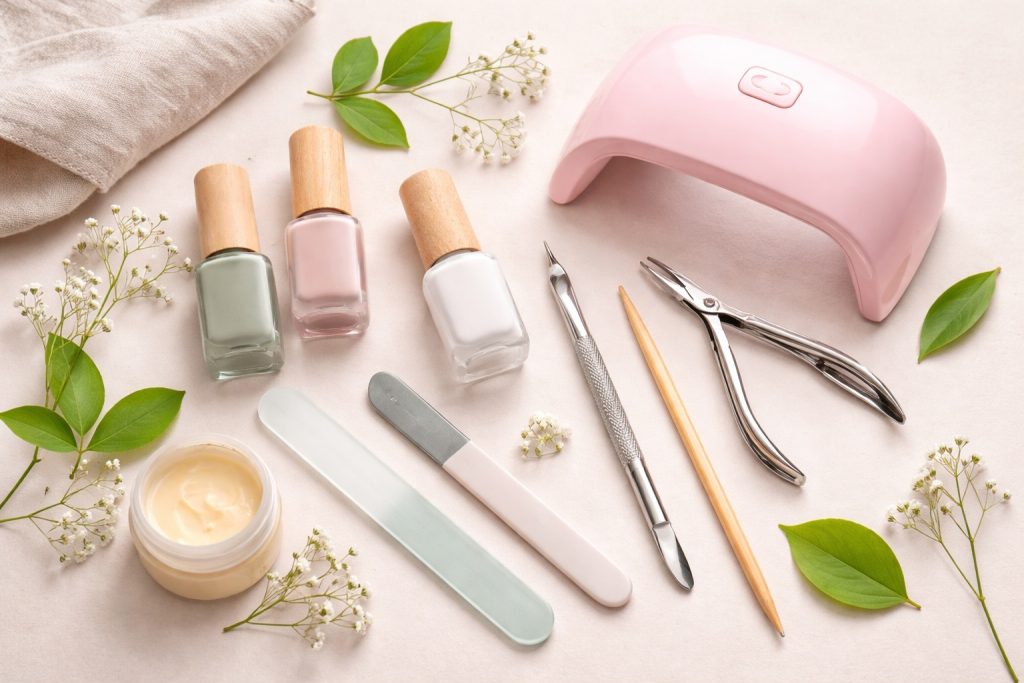
What a lower-waste manicure can actually look like
A lower-waste manicure is usually not about finding a perfect product. It is more about reducing how much you use, how often you redo it, and how many separate items the routine requires.
That can include:
- choosing longer-wearing options so you redo your nails less often
- using tools more than once where hygiene and safety allow
- avoiding impulse buying of large colour collections you will barely use
- looking for simpler systems that combine multiple steps
- being realistic about removal, ventilation, and overall product use
In other words, the most sustainable manicure is rarely the one that promises endless novelty. It is the one that helps you buy a bit less, use what you have for longer, and avoid turning beauty into another throwaway habit.
Where at-home systems may help
At-home nail systems can make sense for people trying to cut back on frequent salon visits or streamline their routine, but only if the products are used thoughtfully. A longer-lasting manicure may reduce how often you need to start over, and a simplified process may reduce the number of separate bottles and accessories involved.
For example, some gel nail kits are designed around an at-home routine with a 3-in-1 formula rather than separate base coat, colour, and top coat. That kind of setup does not make a product sustainable by default, but it can support a simpler routine with fewer separate items to buy and manage.
Likewise, gel strips and lamp kits may appeal to people who want a more controlled, at-home option that is easier to plan and use intentionally. The real question is not whether any one product is perfect. It is whether it helps you move away from a more disposable, constantly repeated beauty cycle.
What “cleaner” claims can and cannot tell you
Many nail brands now use language such as “vegan,” “cruelty-free,” or “9-free.” Those claims can be meaningful, but they should not be treated as the whole sustainability story.
For example, Le Mini Macaron says its gel polish line is vegan and “9-free,” meaning it excludes nine chemicals commonly referenced in nail-polish marketing. That may matter to shoppers comparing formulas, especially given long-running concerns around some nail product ingredients. But ingredient exclusions alone do not answer every environmental question. Packaging still matters. Product longevity still matters. Removal methods still matter. And a lower-toxicity claim is not the same thing as a full lifecycle sustainability claim.
That is why the better standard is not perfection. It is honesty. If a product helps reduce overconsumption, simplifies a routine, and lasts long enough to avoid constant re-dos, that is useful. If the marketing goes further than the evidence, consumers should stay cautious.
Practical ways to make nail care more thoughtful
If you want your nail routine to line up a little better with your values, start small.
- Use up the products you already own before buying more.
- Choose shades and finishes you will realistically wear often.
- Prefer routines that reduce repeat applications and unnecessary extras.
- Open windows or improve ventilation when using strong products.
- Follow safe removal practices instead of peeling products off early.
- Be sceptical of sustainability claims that are too broad or too polished.
Those steps may not sound dramatic, but sustainability usually works that way. It is often less about dramatic swaps and more about smaller habits that reduce waste over time.
The bigger picture
It is easy to think of sustainability only in terms of wardrobes, transport, or food. But personal care is part of the same picture. The products we buy, the packaging they arrive in, and the habits they encourage all add up.
Nail care does not need to be perfect to improve. A more thoughtful manicure routine might simply mean buying less, choosing products that last, avoiding needless repetition, and being honest about trade-offs. In that context, at-home systems can be part of a lower-waste routine, not because they are automatically green, but because they may help some people simplify what they use and how often they use it.
That is a more useful sustainability standard anyway: not flawless beauty, but better habits.